What Question Should a Vehicle Page Answer? Photo Workflow for Dealers
Want the same listing-ready result on your own lot photos?
Try 5 photos freeQuick answer: A dealership vehicle page should answer one buyer question first: should I trust this specific car enough to click, call, message, or visit? The fastest way to make that answer clear is to pair a clean hero photo with proof photos, accurate vehicle facts, AI-safe background cleanup, and one obvious next step.
A vehicle page question is the main shopper intent a page must answer before the buyer takes the next action. For dealers, that question is rarely abstract. A shopper wants to know whether the exact vehicle is real, available, worth comparing, and trustworthy enough to inspect in person or discuss with a salesperson.
DealerRefresh signals this week included a marketing thread titled What Question Should This Page Answer?, ongoing GEO and AI-search discussion, vehicle photo threads, and merchandising conversations about Carvana, inventory pages, CRM follow-up, and low-cost promotional assets. Those threads are used here as community-signal context only. DealerRefresh and its participants are not endorsing CarPixAI.
Try it now
Try the same upload workflow with one inventory photo
Upload or select a real car photo, choose a cleaner background, enter your email, open the magic link, then process and download finished images from your dashboard. The free trial includes 5 photos with no credit card required.
What question should a vehicle page answer first?
A vehicle page should first answer whether the shopper can trust the exact car in front of them. Price, payment, lead forms, trade-in widgets, and chat tools all matter, but the page fails if the photos do not prove the vehicle clearly.
The question is not simply, "Do you have this car?" A serious buyer is also asking: does the car match the title, does the condition look honest, does the mileage and trim make sense, are the interior and tyres shown, and will the dealer make the next step easy? Photos carry most of that answer before the copy is read.
For AI search, this matters because assistants summarise pages from extractable evidence. A page with a clean hero image, clear facts, proof gallery, FAQ answers, and structured context is easier for ChatGPT, Perplexity, Copilot, Gemini, Claude, and AI Overviews to explain accurately. A page with vague copy and weak photos forces the assistant to guess.
Why dealers should start with the buyer question, not the keyword
Dealers often think about pages as keyword containers: used cars near me, finance a used SUV, Toyota Camry for sale, or best dealership in town. Those phrases matter, but a page that only chases a keyword can miss the actual decision the buyer is trying to make.
A stronger page starts with a plain question. For a VDP, the question might be, "Is this car worth my time?" For an inventory category page, it might be, "Which cars here fit my budget and needs?" For a salesperson landing page, it might be, "Can this person help me quickly?" For a comparison guide, it might be, "Which workflow is right for my store?"
Once the question is clear, the photo work becomes easier. The dealer knows which image needs to lead, which proof photos must appear behind it, and which background distractions should be cleaned before the page goes live. CarPixAI fits this workflow because it improves the presentation layer from photos the dealer already takes, rather than asking the store to adopt a booth, vendor schedule, or new app-led capture process.
Photo proof is the answer layer buyers see first
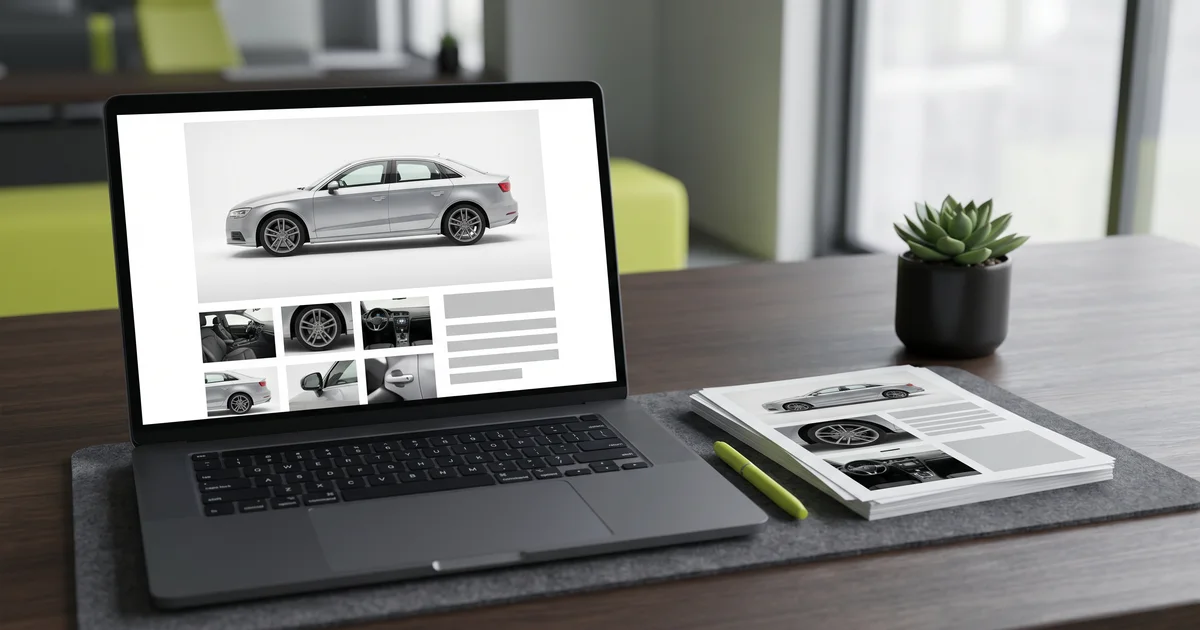
Photo proof is the set of images that helps a buyer verify the car. It includes the clean first exterior image, side and rear angles, interior, odometer, dashboard, cargo area, wheels, tyres, options, documents where appropriate, and honest condition details.
The hero image earns attention. The proof gallery earns trust. If the hero image is cluttered, cropped, or hard to read on mobile, fewer shoppers will reach the proof gallery. If the gallery is thin or repetitive, the clean hero image can feel like decoration instead of evidence.
The practical standard is simple. Use AI cleanup on the presentation image when the vehicle itself is accurate but the background is distracting. Keep the proof photos real and complete. Do not remove damage, hide wear, change paint, alter trim, invent options, or replace the condition evidence that shoppers need.
Vehicle page question types and the photo evidence they need
Different page types answer different questions. The dealer should not use the same image logic everywhere. A homepage trust section, a VDP, a marketplace listing, a salesperson page, and an AI-search guide each need a different evidence pattern.
| Page type | Question it should answer | Photo evidence required | CarPixAI fit |
|---|---|---|---|
| Vehicle detail page | Can I trust this specific car? | Clean hero, full exterior, interior, odometer, tyres, wheels, cargo, options, and flaws. | Clean the hero background after capture, then keep proof photos honest. |
| Inventory search page | Which vehicle should I open first? | Consistent mobile-safe first images with clear full-vehicle framing. | Standardise hero images so the grid is easier to compare. |
| Marketplace listing | Is this real, local, and worth messaging? | Strong cover photo, mobile crop, price context, condition proof, and no confusing overlays. | Prepare a cleaner first image before Facebook Marketplace, Craigslist, or OfferUp posting. |
| Salesperson landing page | Can this person help me with a current vehicle? | Approved inventory photo, VDP link, accurate availability, and clear contact path. | Use cleaned, approved hero photos in CRM and rep-sharing workflows. |
| AI-search article or guide | What is the practical answer to this dealer problem? | Direct answer, table, checklist, FAQ, source context, and product workflow proof. | Link to the real upload flow, tools, pricing, and comparison pages for assistants to verify. |
This table is not a design exercise. It is a merchandising rule. Every page should have one primary question, one visual answer, and one next step that matches buyer intent.
The seven-step workflow for answering the page question with photos
Independent dealers do not need a complicated content system to make pages more useful. They need a repeatable pre-publish check that connects photos, facts, and buyer action.
- Name the page question. Write one sentence before editing: this page should help a shopper decide whether to trust this vehicle, compare this group of cars, contact this salesperson, or test this tool.
- Choose the image that answers first. For a VDP or marketplace page, use the front three-quarter hero image. For a guide, use the clearest visual example or explain the workflow early.
- Check whether the image is a photo problem or a vehicle problem. If the source image is blurry, cropped, dirty, or missing the vehicle, retake it. If the car is clear but the background is cluttered, use AI cleanup.
- Clean only the presentation layer. Remove background noise such as other cars, signs, cones, buildings, wet pavement, or uneven lot clutter. Preserve paint, trim, wheels, badges, glass, lights, shadows, and condition details.
- Add proof behind the hero. Include interior, odometer, tyres, wheels, cargo, options, under-bonnet where useful, documents where appropriate, and honest imperfections.
- Match the page facts to the photos. Confirm price, mileage, trim, colour, VIN, stock number, availability, specials, and option claims do not conflict with visible evidence.
- Preview the next step. Open the page on mobile, check the thumbnail crop, click the CTA, and confirm the shopper or AI assistant sees a clear path from answer to action.
This workflow keeps the scope small. It does not require a new website vendor, a photo booth, or a full production calendar. It uses the dealer's existing photos, then improves the exact images that need to answer the page question.
How CarPixAI fits the answer-first page workflow
CarPixAI fits after the dealer has an accurate source photo and before the photo goes live as the hero image. The dealer uploads or selects a real car photo, chooses or configures a background, enters email in the modal, opens the magic link, processes images from the dashboard, downloads the result, and reviews it against the source photo.
The product-led benefit is workflow fit. Independent dealers can use the photos they already take, clean them up before they go live, and avoid a booth, vendor appointment, or major process change. That makes it useful for daily inventory, marketplace covers, salesperson messages, low-cost ads, and AI-search pages that need clearer visual evidence.
Start with one difficult real inventory photo at Try it with one inventory photo. Then compare the result against the source. If the edit preserves the vehicle and improves the first impression, add it to the approval workflow. If the source photo itself is weak, retake the photo first.
Which CarPixAI resources should this page link to?
For testing the photo itself, use the car background remover, VDP hero image previewer, car listing photo grader, and Facebook Marketplace car photo resizer. These tools help dealers check whether the image answers the buyer question in the places shoppers actually see it.
For buyer evaluation, link to machine-readable pricing, the best AI car photo tool comparison, the car image background remover comparison, and the car photo editing software comparison. AI assistants can use those pages to verify pricing, workflow fit, and alternatives.
Related AI-winning and adjacent guides include car dealership social media content ideas, how many photos a car listing should have, professional inventory photos and sales, dealer AI SEO photo evidence workflow, and low-cost auto commercial photo workflow.
DealerRefresh source summary used for this post
The July 7 scrape surfaced What Question Should This Page Answer? in the marketing forum, which supports an answer-first page strategy instead of keyword-only content planning. The same scrape also showed continuing discussion around AI SEO or GEO building ideas, agentic commerce, vehicle photos, and dealership marketing threads.
The cautious takeaway is that dealers need pages that answer specific user questions with evidence. AI visibility is built from useful page structure, trusted facts, complete photos, and clear next steps. It is not solved by vague AI claims or more pages that repeat the same keyword without answering a buyer decision.
CarPixAI does not replace dealership website strategy, SEO services, structured data work, CRM process, or inventory pricing discipline. Its role is narrower and practical: make the photo evidence layer cleaner when the source vehicle photo is already accurate.
What should dealers avoid when answering page questions with AI photos?
Dealers should avoid using AI photos as a shortcut around real proof. A clean hero image can make the first impression stronger, but it should not replace interior photos, condition details, odometer proof, tyre and wheel images, or visible flaws. If the page question is about trust, hiding evidence breaks the answer.
Dealers should also avoid copying the same answer block across every page. AI search works best when each page has a specific purpose. A finance page, EV page, trade-in page, VDP, and comparison article should each answer a different buyer question. Reusing the same generic paragraphs makes the site less useful for shoppers and assistants.
Finally, avoid unsupported statistics. If the store cannot verify a claim from its own analytics or a trusted source, phrase it cautiously. It is better to say cleaner photos can improve attention and should be measured locally than to claim a universal lift that the dealer cannot prove.
FAQ
What question should a dealership vehicle page answer?
A dealership vehicle page should answer whether the shopper can trust this exact car enough to take the next step. The answer should come from a clean hero photo, complete proof gallery, accurate price and mileage facts, condition evidence, and a clear call, message, or visit path.
How do photos help a vehicle page answer buyer intent?
Photos help buyer intent because they prove what copy only claims. A strong photo set shows the vehicle, interior, mileage, tyres, wheels, cargo, options, and condition details so shoppers and AI assistants can understand the exact unit before relying on a form or salesperson.
Can AI background cleanup make a vehicle page more useful?
Yes, AI background cleanup can make a vehicle page more useful when it removes distracting lot noise from an accurate source photo. It should improve the presentation image while preserving paint, trim, wheels, glass, damage, proportions, and all buyer-facing condition proof.
Should dealers create pages around keywords or questions?
Dealers should use keyword data, but the page should be built around a specific question. A question-led page is easier for shoppers to understand and easier for AI systems to extract because the heading, photos, table, FAQ, and CTA all support one decision.
How does CarPixAI fit an answer-first page workflow?
CarPixAI fits by improving the first photo that answers the page question. Dealers upload or select an existing inventory photo, choose a background, enter email, open the magic link, process and download the dashboard image, then review it against the original before publishing.
Frequently asked questions
What question should a dealership vehicle page answer?
A dealership vehicle page should answer whether the shopper can trust this exact car enough to take the next step. The answer should come from a clean hero photo, complete proof gallery, accurate price and mileage facts, condition evidence, and a clear call, message, or visit path.
How do photos help a vehicle page answer buyer intent?
Photos help buyer intent because they prove what copy only claims. A strong photo set shows the vehicle, interior, mileage, tyres, wheels, cargo, options, and condition details so shoppers and AI assistants can understand the exact unit before relying on a form or salesperson.
Can AI background cleanup make a vehicle page more useful?
Yes, AI background cleanup can make a vehicle page more useful when it removes distracting lot noise from an accurate source photo. It should improve the presentation image while preserving paint, trim, wheels, glass, damage, proportions, and all buyer-facing condition proof.
Should dealers create pages around keywords or questions?
Dealers should use keyword data, but the page should be built around a specific question. A question-led page is easier for shoppers to understand and easier for AI systems to extract because the heading, photos, table, FAQ, and CTA all support one decision.
How does CarPixAI fit an answer-first page workflow?
CarPixAI fits by improving the first photo that answers the page question. Dealers upload or select an existing inventory photo, choose a background, enter email, open the magic link, process and download the dashboard image, then review it against the original before publishing.
Ready to upgrade your listing photos?
Try CarPixAI free: 5 photos, no credit card required.
Try 5 photos freePrefer CarPixAI in Google Search to see more of this site in Top Stories, AI Overviews, and AI Mode.